
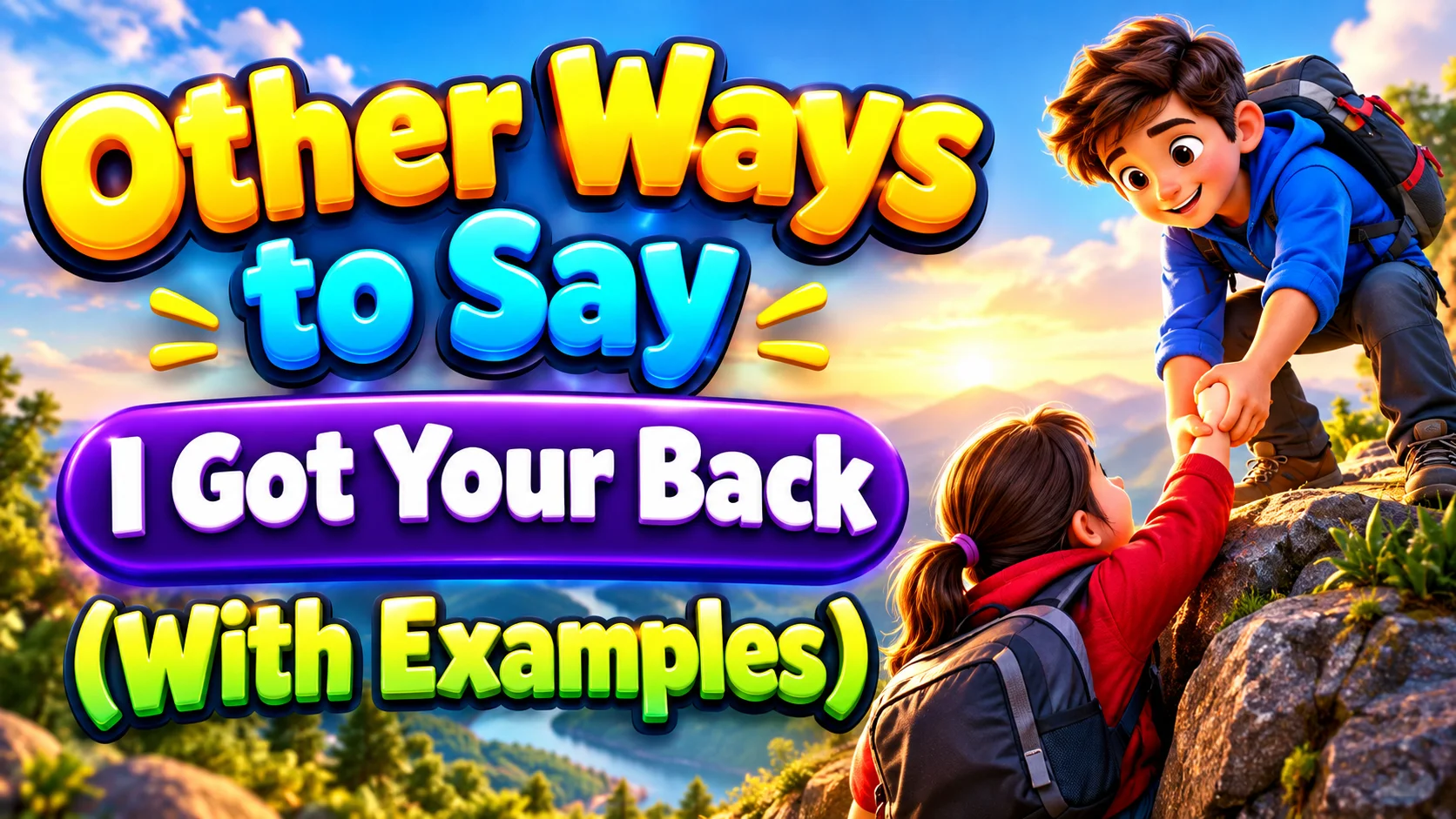
Other Ways to Say “I Got Your Back” (With Examples) explains this common English idiom and helps you choose warm, natural phrases for support.
I got your back is a popular English phrase that tells someone you are ready, prepared, and willing to support, protect, and help them during difficult or challenging situations. It signifies loyalty, reassurance, and a promise to look out for someone, defend them from harm, and be there when they need them. I remember a time when a friend truly had my back, and I could feel safe because I could always rely on that person.
When writing a game guide, you may need to figure this out, understand correct sentence structure, and notice how John’s wording or John tried saying something differently. With practice, the right saying can come naturally and have the right feel. You can discover more through the American Heritage Dictionary of the English Language, which offers detailed entries about someone’s support. Subscribe to a free daily email or video to get new insights every day about language, including how being willing to provide assistance in any case may matter when thugs bother, bullies attack, or friends need help again. Parents, a buddy, and close friends can also make everything OK.
The readiness behind this phrase matters in real life because it is widely used and often heard among friends, colleagues, and teams. It works as a signal that no one is alone, and support is available when needed. This article explores alternative expressions, complete examples, usage, guidance, and practical tips for using them naturally. Instead of repeating the same old line, try something with more warmth when a friend or colleague is facing a tough time.
What Does “I Got Your Back” Mean?
“I got your back” is an informal expression that means “I will support you,” “I will protect you,” or “I will help you if you need me.” It communicates a sense of loyalty and reassurance. When someone says it, they are usually letting another person know that they do not have to handle a difficult situation completely alone.
The expression can be used in several closely related ways. A friend might say, “Don’t worry about the presentation; I got your back,” meaning they will help if something goes wrong. Someone might also use it in a more protective sense, such as, “Go talk to them—I got your back,” meaning they will support the person or watch out for them. The phrase is generally casual, confident, and friendly, rather than formal.
In everyday English, “I got your back” is often understood as a promise of practical or emotional support. It does not necessarily mean the speaker will solve the problem; it simply reassures the other person that help, loyalty, or encouragement is available.
Common Situations Where “I Got Your Back” Is Used
“I got your back” is most natural in casual conversation, texting, friendships, and personal relationships. Friends may use it before an important event, during a difficult situation, or simply to reassure each other. For example, one friend might say, “You go ahead and talk to them. I got your back.”
The phrase also appears in workplace conversations, particularly in relaxed teams where colleagues have an informal relationship. A coworker might tell you, “Finish the report and I got your back if the manager asks questions.” However, the wording can sound too casual in a highly formal email, official document, or communication with someone you do not know well.
It can also work in school, team activities, social media posts, and supportive personal messages. People often choose it when they want to communicate solidarity without making the message overly emotional. If the situation calls for more professionalism, warmth, or precision, another expression may communicate the same idea more effectively.
Is It Professional or Polite to Say “I Got Your Back”?
“I got your back” is generally friendly, supportive, and informal. It is not rude, but it has a conversational quality that makes it better suited to people you know reasonably well. Among friends, classmates, teammates, or close coworkers, it can sound natural and reassuring.
In a formal workplace setting, however, expressions such as “I’m here to support you” or “You can count on my support” may be more appropriate. They communicate a similar message without the slang-like quality of “I got your back.”
The expression is therefore not inherently unprofessional; context matters. A relaxed team conversation may comfortably use it, while a formal business email to a client probably calls for more polished wording.
Advantages and Disadvantages of Saying “I Got Your Back”
Advantages
The biggest advantage of “I got your back” is its directness. The phrase quickly communicates that you are willing to help, support, or protect someone. It can make a person feel less alone during a stressful moment.
It also has a strong sense of loyalty and solidarity. Because the expression is conversational, it can feel sincere and personal when used between friends or people who share a close relationship. Its short, confident wording also makes it especially effective in texts and everyday conversations.
Disadvantages
The main limitation is its informal tone. “I got your back” may sound too casual for formal correspondence, official communication, or situations where a more respectful tone is expected.
It can also be somewhat broad in meaning. Depending on the context, it might mean emotional support, practical assistance, protection, or simply encouragement. If you need to communicate exactly what kind of support you are offering, a more specific expression may be clearer.
If you use the phrase frequently, alternatives can also help you express support with different levels of warmth, confidence, and formality.
1. I’m Here for You
Meaning
“I’m here for you” means that you are available to support someone emotionally or practically when they need you. It communicates presence, care, and reassurance.
Definition
Definition: A promise that you are available to support or help someone during a difficult or important situation.
Detailed Explanation
“I’m here for you” is broader and often warmer than “I got your back.” Rather than emphasizing protection or loyalty in a particular situation, it focuses on your willingness to be present. It is especially natural when someone is going through something difficult or needs emotional reassurance. The phrase can also be used in close relationships when you want to show genuine care without sounding overly dramatic.
Scenario Examples
Scenario: A friend is nervous about a difficult conversation.
Example: “Whatever happens when you talk to them, I’m here for you.”
Scenario: Someone you care about is having a stressful week.
Example: “Take things one step at a time. I’m here for you if you need anything.”
Scenario: A teammate is struggling with a demanding project.
Example: “If you get stuck, I’m here for you. We can work through it together.”
Best Use
Use this expression for personal messages, friendships, emotional support, relationships, and supportive conversations. It also works in professional settings when the relationship is reasonably warm.
Tone
Tone: Warm, caring, reassuring
It emphasizes emotional presence more than the protective or confident feeling of “I got your back.”
2. You Can Count on Me
Meaning
“You can count on me” means that someone can trust you to help, support them, or do what you have promised.
Definition
Definition: A reassuring statement that someone can depend on you.
Detailed Explanation
This expression emphasizes reliability and dependability. Compared with “I got your back,” it sounds slightly more deliberate and can work in both casual and professional communication. It is useful when you want to reassure someone that you will follow through rather than merely offer encouragement. The phrase can be especially effective when someone needs practical help or wants reassurance that you will keep a commitment.
Scenario Examples
Scenario: A colleague asks whether you can help with an upcoming presentation.
Example: “Don’t worry about the final slides. You can count on me.”
Scenario: Your friend needs someone to pick them up after an event.
Example: “Just give me a call when you’re ready. You can count on me.”
Scenario: A teammate is worried about an important competition.
Example: “Whatever happens, you can count on me to be there.”
Best Use
It works well in casual conversation, workplace communication, emails, teamwork, and personal messages.
Tone
Tone: Reliable, confident, supportive
The expression highlights trust and dependability, making it somewhat more polished than “I got your back.”
3. I’ve Got You Covered
Meaning
“I’ve got you covered” means that you have taken care of something or are prepared to help if something is needed.
Definition
Definition: A statement that you will handle a need, problem, responsibility, or situation for someone.
Detailed Explanation
This expression is particularly useful when support involves a practical task or specific responsibility. It can sound more action-oriented than “I got your back.” If someone is worried about a particular detail, “I’ve got you covered” reassures them that you have already considered it or will take care of it. It is informal but widely understood in everyday English.
Scenario Examples
Scenario: Your coworker needs to leave early for an appointment.
Example: “Go ahead and leave early. I’ve got you covered for the afternoon.”
Scenario: A friend forgot to bring a phone charger.
Example: “Don’t worry about it—I’ve got you covered.”
Scenario: A teammate is concerned about part of a group project.
Example: “You handle the research, and I’ve got you covered on the presentation.”
Best Use
Use it for practical help, teamwork, workplace conversations, casual conversations, and texting.
Tone
Tone: Casual, confident, practical
It focuses on taking care of something specific, rather than simply offering emotional support.
4. I’ll Support You
Meaning
“I’ll support you” means that you intend to help, encourage, or stand behind someone.
Definition
Definition: A direct promise to provide help, encouragement, or assistance.
Detailed Explanation
This is a more straightforward and somewhat neutral alternative to “I got your back.” It does not have the slang-like quality of the original phrase, so it can fit a wider range of situations. Depending on the context, “support” can refer to emotional encouragement, practical help, or agreement with someone’s efforts. Because it is broad, you can use it when the exact type of assistance is not yet clear.
Scenario Examples
Scenario: A friend is starting a challenging new project.
Example: “It may be difficult at first, but I’ll support you throughout the process.”
Scenario: A manager wants to reassure an employee about taking on a new responsibility.
Example: “This is a big step, but I’ll support you as you get started.”
Scenario: A partner is pursuing an important personal goal.
Example: “Whatever you decide, I’ll support you.”
Best Use
It fits professional communication, personal relationships, supportive conversations, emails, and formal or semi-formal messages.
Tone
Tone: Supportive, neutral, respectful
It is less colloquial than “I got your back” and can therefore suit more professional situations.
5. I’m on Your Side
Meaning
“I’m on your side” means that you support someone, especially when there is a disagreement, conflict, or difficult situation.
Definition
Definition: A statement showing that you support or sympathize with someone in a particular situation.
Detailed Explanation
This phrase places more emphasis on loyalty and alignment than on practical assistance. If two people disagree and you want someone to know that you understand or support them, “I’m on your side” can be very natural. However, it does not necessarily promise that you will take action or solve the problem. Its meaning depends strongly on the situation.
Scenario Examples
Scenario: A friend feels misunderstood during a disagreement.
Example: “I understand why you’re upset. I’m on your side.”
Scenario: A teammate worries that others will blame them unfairly.
Example: “You explained what happened clearly, and I’m on your side.”
Scenario: Someone needs emotional reassurance after a difficult conversation.
Example: “Whatever happens next, remember that I’m on your side.”
Best Use
It works best in personal conversations, disagreements, friendships, relationships, and supportive messages.
Tone
Tone: Loyal, reassuring, personal
It communicates solidarity, particularly when someone feels challenged or misunderstood.
6. I’ll Stand by You
Meaning
“I’ll stand by you” means that you will remain supportive and loyal, especially when someone faces difficulty.
Definition
Definition: A promise to remain loyal and supportive during a difficult or uncertain situation.
Detailed Explanation
“I’ll stand by you” has a more emotional and committed quality than “I got your back.” It suggests that your support will continue even when circumstances become challenging. The expression can sound heartfelt in personal relationships, although it can also be used more generally. Because it carries a sense of commitment, it may feel stronger than a casual promise to help.
Scenario Examples
Scenario: A partner is facing a difficult personal decision.
Example: “You don’t have to face this alone. I’ll stand by you.”
Scenario: A close friend is going through a challenging period.
Example: “No matter how complicated things get, I’ll stand by you.”
Scenario: Someone worries that others may abandon them after a mistake.
Example: “You made a mistake, but that doesn’t change our friendship. I’ll stand by you.”
Best Use
Use it in personal relationships, close friendships, emotional conversations, and meaningful messages.
Tone
Tone: Loyal, heartfelt, committed
The phrase expresses lasting support, making it more emotionally significant than many casual alternatives.
7. You Can Rely on Me
Meaning
“You can rely on me” means that someone can trust you to provide help or fulfill a responsibility.
Definition
Definition: A statement assuring someone that you are dependable and can be trusted.
Detailed Explanation
This expression focuses strongly on dependability. It is similar to “You can count on me,” but “rely on” can sound slightly more formal and deliberate. It is particularly useful when the person needs to know that you will be dependable rather than simply sympathetic. It can work comfortably in professional and personal situations.
Scenario Examples
Scenario: A manager needs someone to handle an important task.
Example: “If you need someone to take care of it, you can rely on me.”
Scenario: A friend needs help preparing for an exam.
Example: “Message me whenever you need help. You can rely on me.”
Scenario: A teammate wants reassurance before an important deadline.
Example: “I’ll finish my part before Friday. You can rely on me.”
Best Use
It works well in professional communication, teamwork, personal relationships, emails, and formal or semi-formal conversations.
Tone
Tone: Dependable, professional, reassuring
Its wording is more polished and versatile than the casual “I got your back.”
Also Read This: 15 Other Ways to Say “Thank You for Your Kind Words” (With Examples)
8. I’m With You All the Way
Meaning
“I’m with you all the way” means that you will continue supporting someone throughout a process, challenge, or journey.
Definition
Definition: A strong expression of continued support from beginning to end.
Detailed Explanation
This phrase emphasizes ongoing commitment rather than one-time assistance. It is useful when someone is starting a long process and needs reassurance that your support will not disappear after the first step. The expression can sound enthusiastic and emotionally warm. It is generally more natural in personal or motivational situations than in highly formal business writing.
Scenario Examples
Scenario: A friend is training for a major event.
Example: “The training will be tough, but I’m with you all the way.”
Scenario: Someone is working toward a long-term personal goal.
Example: “Keep going. I’m with you all the way.”
Scenario: A partner is beginning a major life change.
Example: “Whatever challenges come up, I’m with you all the way.”
Best Use
It fits personal messages, friendships, relationships, encouragement, motivational conversations, and supportive social posts.
Tone
Tone: Warm, enthusiastic, committed
It gives the listener a strong sense of continued companionship and encouragement.
9. I’ll Be There for You
Meaning
“I’ll be there for you” means that you will be present and supportive when someone needs you.
Definition
Definition: A promise to remain available and supportive during someone’s difficult or important moments.
Detailed Explanation
This expression is similar to “I’m here for you,” but the future-oriented “I’ll be there” can emphasize a commitment to showing up when needed. It can refer to emotional support, physical presence, or practical help. The phrase often feels more personal than professional, particularly when used between close friends or partners. It is a good choice when you want to reassure someone that they can expect your presence.
Scenario Examples
Scenario: A friend is preparing for an important appointment.
Example: “If you want someone with you, I’ll be there for you.”
Scenario: Someone is nervous about an upcoming event.
Example: “Whatever happens tomorrow, I’ll be there for you.”
Scenario: A loved one is facing a difficult period.
Example: “You don’t have to handle everything by yourself. I’ll be there for you.”
Best Use
Use it for personal relationships, close friendships, emotional support, and reassuring messages.
Tone
Tone: Caring, warm, reassuring
It highlights presence and commitment, rather than simply taking responsibility for a task.
10. I’m in Your Corner
Meaning
“I’m in your corner” means that you support and encourage someone, particularly when they are facing a challenge.
Definition
Definition: A casual expression meaning that you support, encourage, or defend someone.
Detailed Explanation
This expression comes from the idea of having someone supporting you from your corner, particularly in a contest or difficult situation. It has a distinctly encouraging and supportive quality. Like “I got your back,” it is informal, but it can sound a little more expressive or colorful. It does not necessarily mean you will solve the problem; it means you are firmly supporting the person.
Scenario Examples
Scenario: A friend is preparing for a difficult interview.
Example: “Go in there and do your best. I’m in your corner.”
Scenario: A colleague is taking on a challenging project.
Example: “It’s a tough assignment, but I’m in your corner if you need advice.”
Scenario: Someone feels discouraged after receiving criticism.
Example: “Don’t let one bad review define you. I’m in your corner.”
Best Use
It works best in casual conversation, friendships, encouragement, teamwork, and supportive personal messages.
Tone
Tone: Encouraging, loyal, casual
It has a slightly figurative and energetic quality that makes it memorable in informal communication.
11. I’ve Got You
Meaning
“I’ve got you” means that you are taking care of someone, helping them, or making sure they are supported.
Definition
Definition: A short reassurance that you will help, protect, or take care of someone.
Detailed Explanation
“I’ve got you” is one of the closest casual alternatives to “I got your back.” It is short, confident, and highly conversational. Depending on the situation, it can mean “I will help you,” “I understand,” “I’ll take care of this,” or “You are safe with me.” Because the expression is so context-dependent, the surrounding situation usually determines its exact meaning.
Scenario Examples
Scenario: A friend is worried about getting home safely.
Example: “Don’t worry about finding a ride. I’ve got you.”
Scenario: A coworker needs help with a task.
Example: “You handle the client call. I’ve got you on the paperwork.”
Scenario: A friend feels overwhelmed by an upcoming challenge.
Example: “Take a breath. I’ve got you.”
Best Use
Use it in texting, casual conversation, friendships, close relationships, and informal teamwork.
Tone
Tone: Casual, confident, reassuring
Its brevity makes it feel immediate and personal, but it may be too informal for formal writing.
12. I’ll Have Your Back
Meaning
“I’ll have your back” means that you promise to support or protect someone when they need you.
Definition
Definition: A promise to support, defend, or help someone in a difficult situation.
Detailed Explanation
This expression is extremely close in meaning to “I got your back,” but it uses a future-oriented construction. “I’ll have your back” can sound like a clear promise about what you will do in a particular situation. It remains informal and conversational, so it works best with friends, teammates, and relaxed coworkers. It can also sound especially natural when discussing a future challenge.
Scenario Examples
Scenario: A friend is about to speak up in a difficult meeting.
Example: “Say what you need to say. I’ll have your back.”
Scenario: A teammate is worried about a demanding assignment.
Example: “Take care of your part, and I’ll have your back if anything comes up.”
Scenario: Someone is entering an unfamiliar social situation.
Example: “Just come over if you feel uncomfortable. I’ll have your back.”
Best Use
It is best for casual conversations, friendships, teamwork, texting, and informal workplace communication.
Tone
Tone: Casual, loyal, confident
It preserves much of the original phrase’s direct and supportive character.
13. You’re Not Alone
Meaning
“You’re not alone” tells someone that they have support and do not have to face a difficult situation by themselves.
Definition
Definition: A reassurance that someone has people who care about them or are willing to help.
Detailed Explanation
This expression is more focused on emotional reassurance than direct action. It does not necessarily promise that you will solve a problem, but it reminds someone that they have support. It can be especially meaningful when someone feels isolated, overwhelmed, or discouraged. Compared with “I got your back,” it is softer and often more emotionally sensitive.
Scenario Examples
Scenario: A friend is dealing with a difficult personal situation.
Example: “I know this feels overwhelming right now, but you’re not alone.”
Scenario: A student is struggling with a demanding course.
Example: “A lot of us are finding this difficult. You’re not alone.”
Scenario: Someone is worried about asking for help.
Example: “You don’t have to figure everything out by yourself. You’re not alone.”
Best Use
Use it for emotional support, personal messages, friendships, relationships, school, and encouraging conversations.
Tone
Tone: Gentle, compassionate, reassuring
It emphasizes belonging and emotional support rather than protection or practical assistance.
14. I’m Here to Help
Meaning
“I’m here to help” means that you are available and willing to provide assistance.
Definition
Definition: A direct statement that you are available to assist someone with a problem or task.
Detailed Explanation
This is one of the most practical and versatile alternatives. Unlike “I got your back,” it clearly focuses on assistance rather than loyalty or protection. It can be used in both personal and professional situations and is particularly suitable when someone needs concrete help. Its straightforward wording also makes it a useful choice when clarity matters more than emotional expression.
Scenario Examples
Scenario: A coworker is struggling with a new process.
Example: “If you have questions about the system, I’m here to help.”
Scenario: A friend is moving to a new apartment.
Example: “Let me know what you need. I’m here to help.”
Scenario: A student needs assistance with an assignment.
Example: “If you’re confused about the instructions, I’m here to help.”
Best Use
It works well in professional communication, customer communication, school, emails, teamwork, personal messages, and everyday conversation.
Tone
Tone: Helpful, neutral, polite
Its clear and practical wording makes it suitable for more formal contexts than “I got your back.”
15. You Have My Support
Meaning
“You have my support” means that you are backing someone, encouraging them, or approving of their efforts or decision.
Definition
Definition: A formal or semi-formal statement expressing encouragement, approval, or backing.
Detailed Explanation
This phrase has a more formal and measured quality than “I got your back.” It is especially useful when you want to express support without sounding overly casual or emotional. It can refer to a person’s goal, decision, project, or position rather than only a difficult personal situation. Because of its polished wording, it can work well in professional and written communication.
Scenario Examples
Scenario: A colleague is leading a new workplace initiative.
Example: “It’s an ambitious project, and you have my support.”
Scenario: A friend is making an important career decision.
Example: “Whatever you decide, you have my support.”
Scenario: Someone is organizing a community project.
Example: “Your idea has real potential, and you have my support.”
Best Use
Use it in professional communication, formal or semi-formal messages, workplace emails, personal encouragement, and situations involving decisions or initiatives.
Tone
Tone: Respectful, supportive, formal
It communicates backing and encouragement without the slang or informality of “I got your back.”
FAQs
What is another way to say “I got your back”?
There are several natural alternatives, depending on the situation. “I’m here for you” works well for emotional support, while “You can count on me” emphasizes reliability. For practical assistance, “I’ve got you covered” is useful, and “You have my support” is more appropriate when you want a formal or professional tone.
What does “I got your back” mean?
“I got your back” means “I will support you, help you, or protect you if necessary.” It is an informal expression that communicates loyalty and reassurance. The exact meaning depends on the context: it can refer to emotional support, practical help, or protection.
Is “I got your back” professional?
“I got your back” is generally casual rather than formal. It can be perfectly acceptable among relaxed coworkers or teammates who have an informal relationship, but it may not be the best choice for formal emails, official documents, or communication with clients. In those settings, phrases such as “I’m here to help” or “You can rely on me” may sound more appropriate.
What is a more polite way to say “I got your back”?
A polite alternative depends on what you want to communicate. “I’m here to help” is clear and courteous, while “You can rely on me” sounds dependable and professional. For emotional support, “I’m here for you” is warmer and more personal.
Which alternative works best in formal communication?
For formal or professional communication, “You can rely on me,” “I’ll support you,” “I’m here to help,” and “You have my support” are generally more suitable than “I got your back.” The best choice depends on whether you want to emphasize practical assistance, dependability, encouragement, or formal support.
Conclusion
Choosing another way to say “I got your back” is not simply about replacing one phrase with another. The best expression depends on the relationship, situation, level of formality, and kind of support you want to communicate.
Use “I’m here for you” when you want warmth and emotional reassurance. Choose “You can count on me” when reliability matters, or “I’ve got you covered” when you are offering practical help. In more formal settings, “You have my support” or “You can rely on me” may communicate your message more appropriately.
The important thing is to match your wording to the moment. Similar expressions can carry noticeably different tones, so a thoughtful choice can make your message feel more natural, sincere, and meaningful.
